

 Search for...
 English
 Español
 中文简体
中文简体What is the purpose of an impact sprinkler? Let me explain!
The main function of an impact sprinkler is to provide a reliable and efficient method for evenly distributing water over large areas. They are very common tools in horticulture, agriculture, and landscape irrigation.
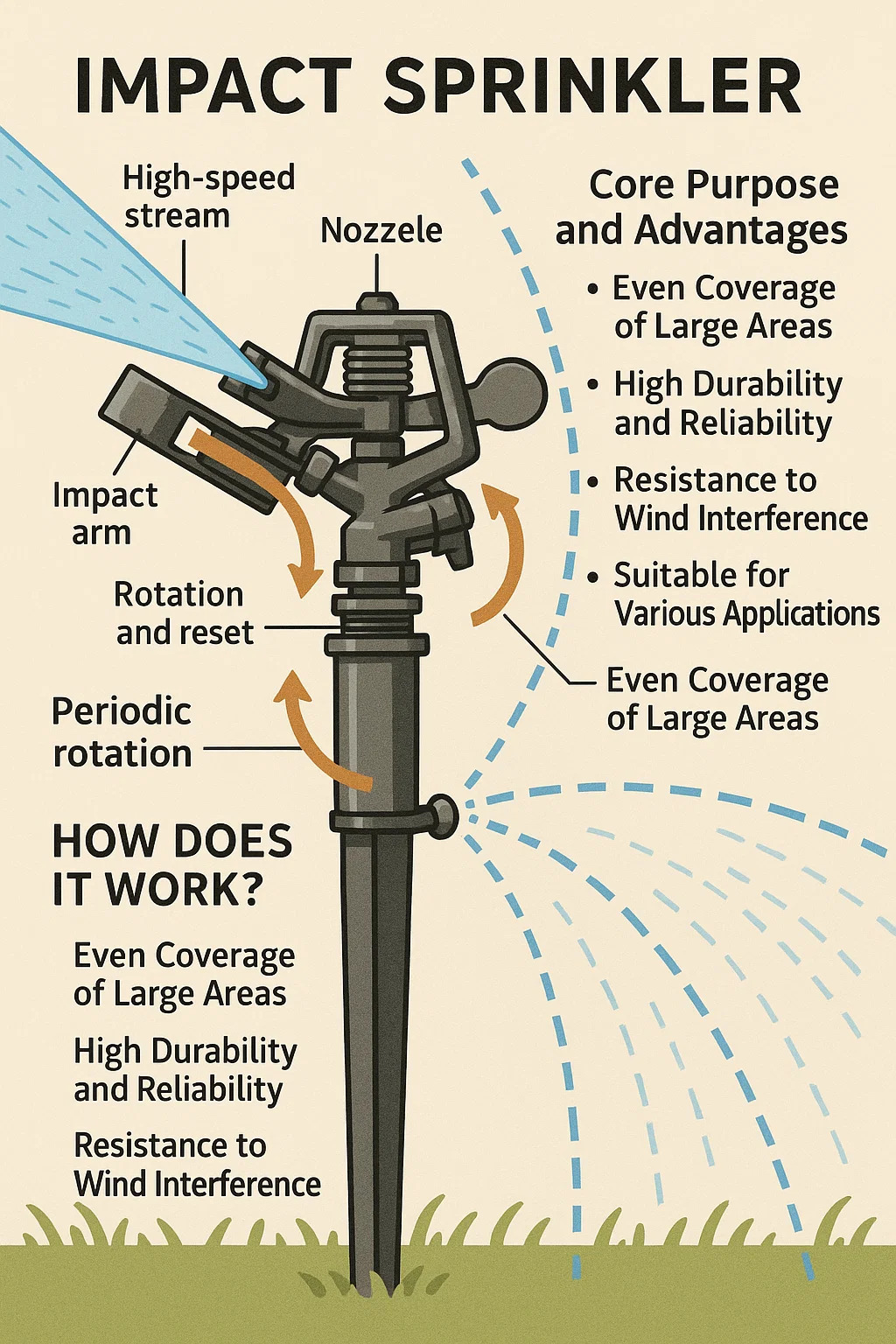
■ Core Purpose and Advantages
--Even Coverage of Large Areas:
This is the primary task of the impact sprinkler. They are designed to project a stream of water outwards, covering a large circular or fan-shaped area, ensuring that the entire irrigated area receives sufficient water.
--High Durability and Reliability:
Due to their simple mechanical impact principle, impact sprinklers are robust and can operate reliably under various water quality conditions (including water containing small impurities), requiring minimal maintenance.
--Resistance to Wind Interference:
They typically produce larger water droplets, which makes the water stream less susceptible to being blown away by wind compared to fine mist, helping to maintain the water's range and intended coverage pattern.
--Suitable for Various Applications:
Agricultural Irrigation: They are an economical and effective choice for irrigating large areas of crops.
Lawns and Pastures: Ensuring sufficient water for large lawns, parks, or pastures.
Fire Suppression and Cooling: In industrial or special environments, they are sometimes used for dust suppression or pre-wetting and cooling equipment.
■ How Does It Work?
The unique aspect of the impact sprinkler lies in its movement:
--Water Flow Propulsion:
A high-speed stream of water is ejected from the nozzle.
--Impact Arm Recoil:
The water stream strikes a small component called the "impact arm" or "reaction arm." This impact arm is quickly pushed away from the nozzle, simultaneously striking a small tooth or notch below the arm.
--Rotation and Reset:
After being pushed away, the impact arm quickly springs back to its original position, ready to receive the next impact from the water stream.
--Periodic Rotation:
Each "impact-reset" cycle gives the sprinkler body a small thrust, causing it to rotate a small step in a preset direction. This process repeats continuously, allowing the impact sprinkler to rotate slowly and regularly, achieving comprehensive and even water coverage of the surrounding area.
Related products
-
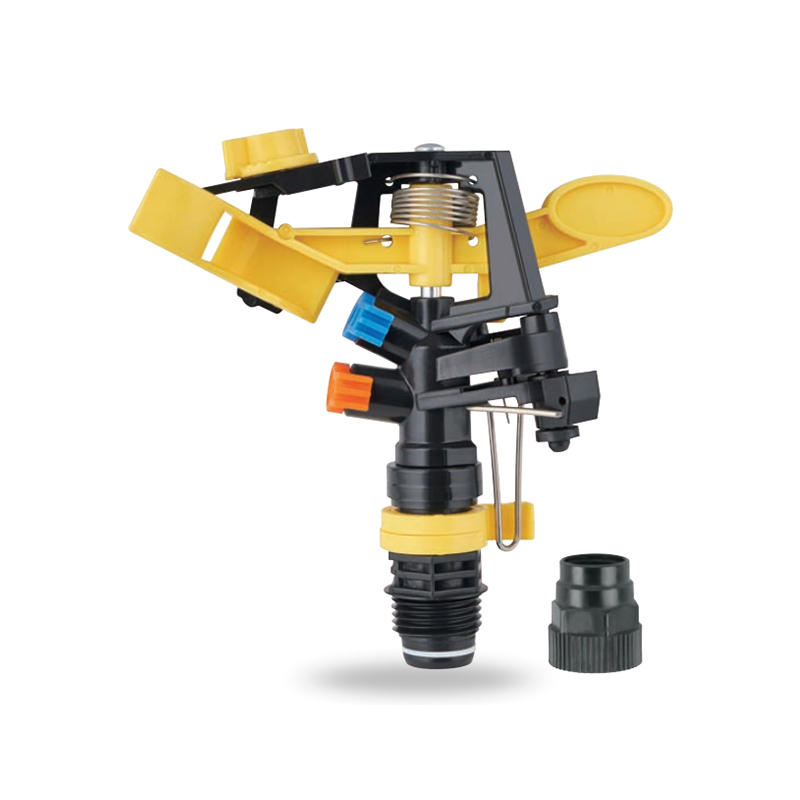
Impact sprinkler for agricultural irrigation is a common and efficient agricultural irrigation tool designed for large areas of farmland. Its unique structure can evenly cover a large area by rotating...
See Details -
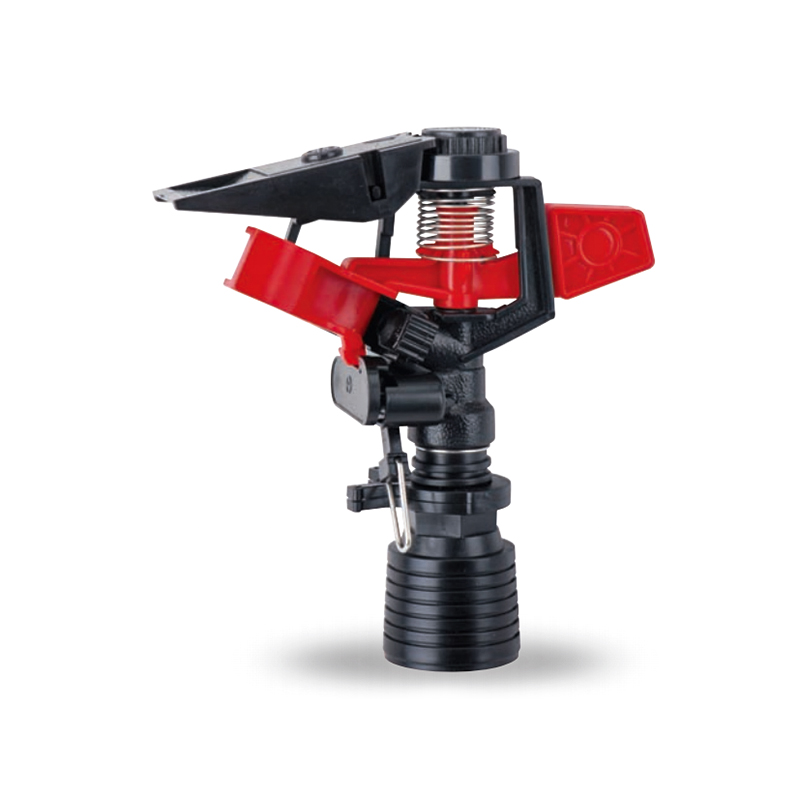
This 360 degree adjustable rocker arm nozzle impact sprinkler is an essential part of an irrigation system designed to meet a wide range of horticultural and agricultural needs. Its flexible adjustmen...
See Details -
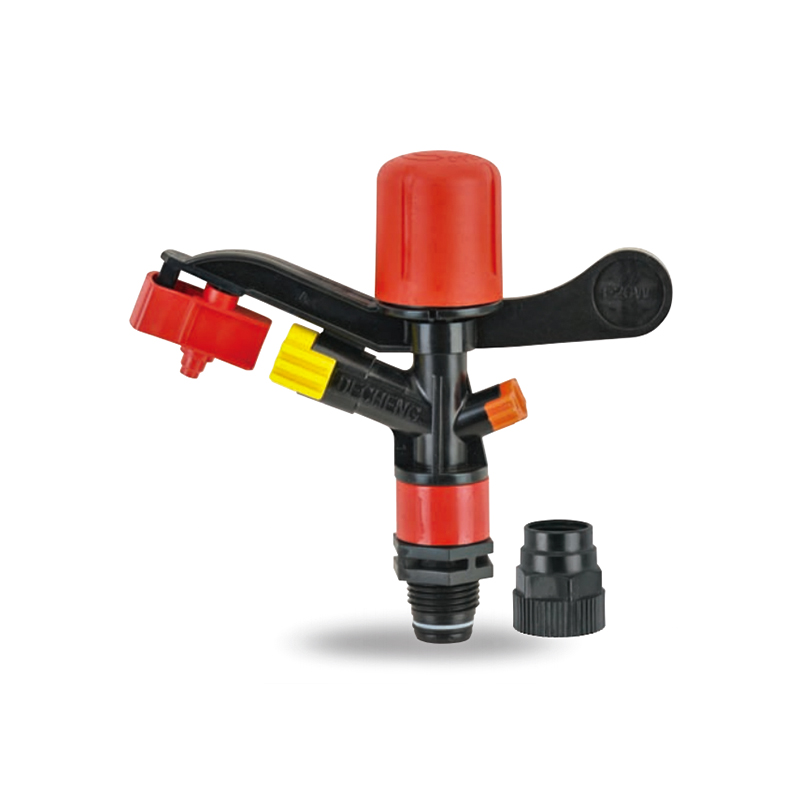
The Plastic Full-Circle Impact Sprinkler Sprayer is a highly efficient full-circle irrigation device designed to provide even moisture coverage. Its lightweight plastic material makes this sprinkler e...
See Details -
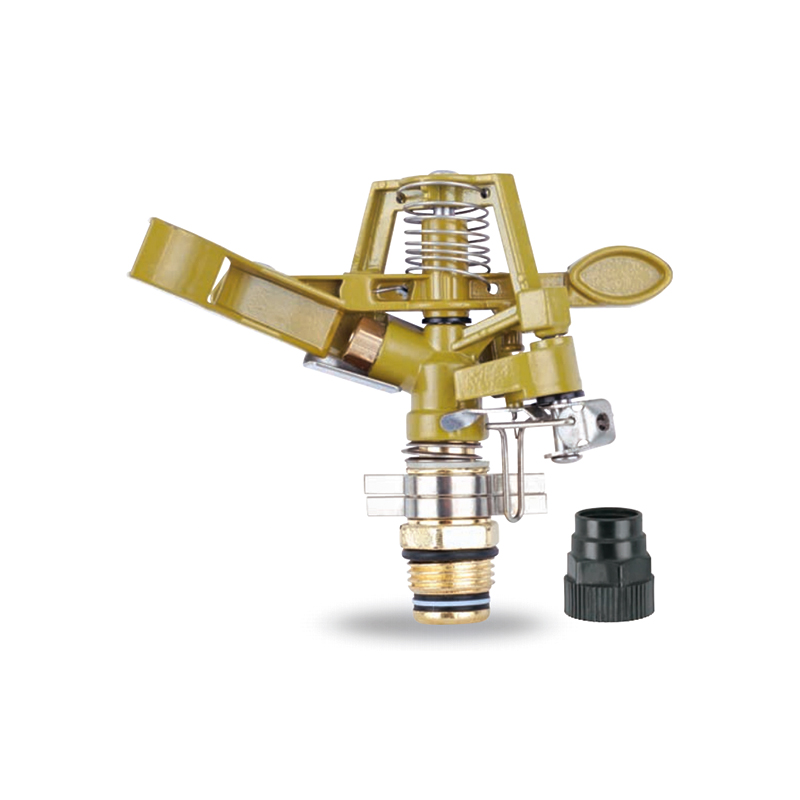
The Irrigation System Adjustable Head Mobile Rotary Zinc Sprinkler is an efficient rotary sprinkler designed for flexible irrigation needs. Its adjustable head allows the user to easily adjust the dir...
See Details -
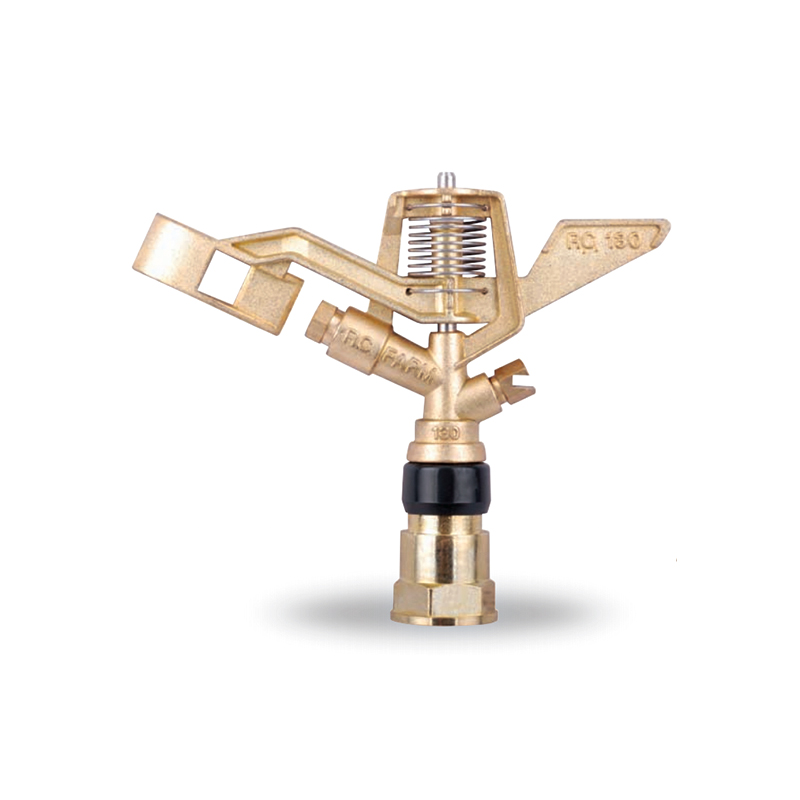
This 3/4” Zinc Alloy Swivel Arm Irrigation Watering System Impact Sprinkler is ideal for agricultural irrigation systems due to its superior durability and corrosion resistance. Its rugged constructio...
See Details -
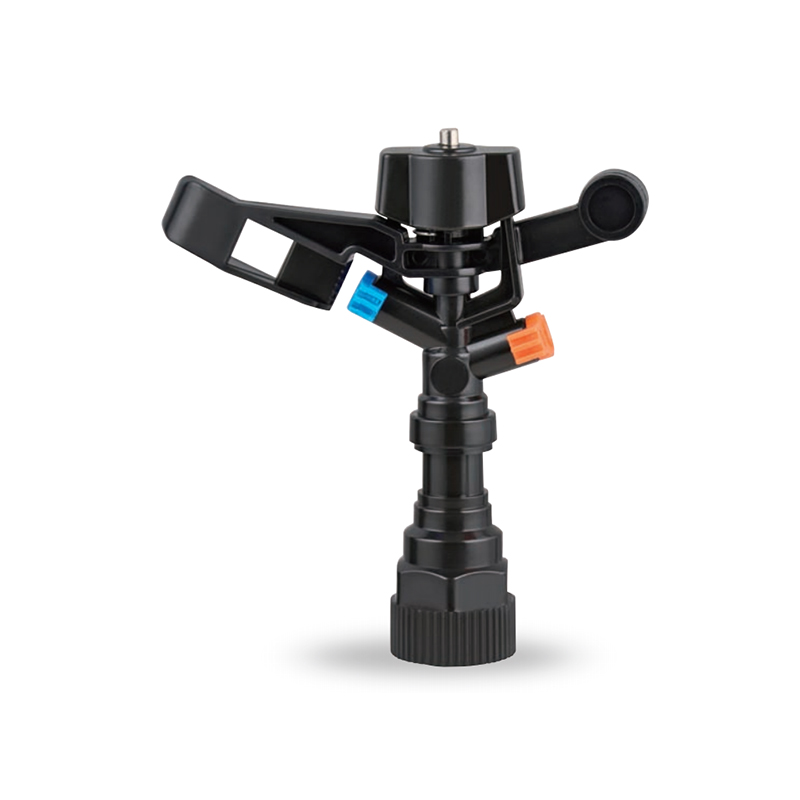
The Double nozzle garden farm impact full-circle sprinkler is well-designed to efficiently and evenly spray water, thus enhancing the quality of crop growth. Whether it's in the home garden or on a la...
See Details -
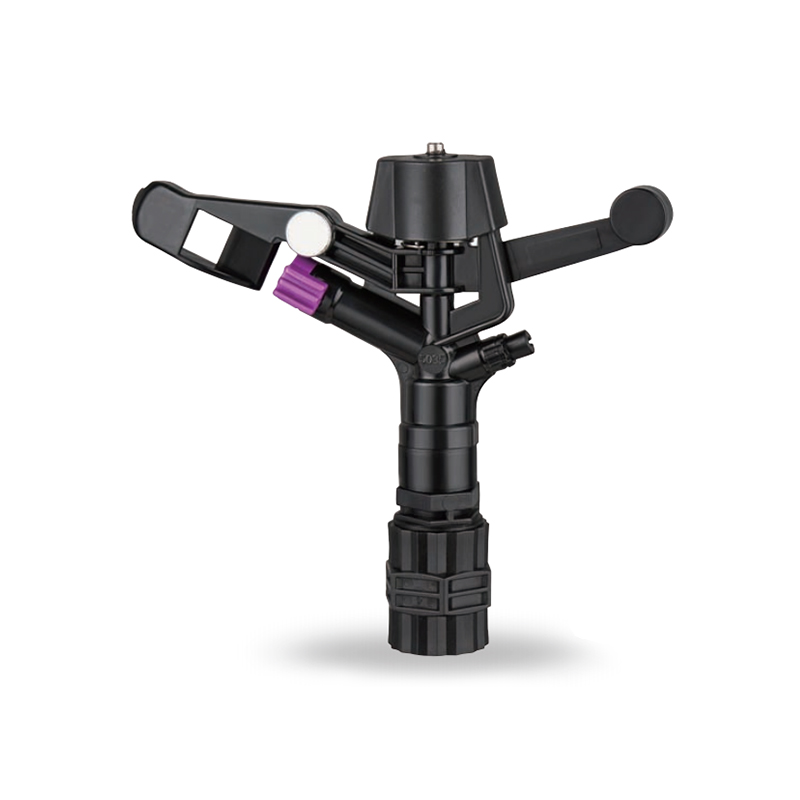
Double nozzle agricultural water plastic impact sprinkler for irrigation sprinkler combines practicality and durability with a dual nozzle system that provides extensive water coverage for a wide rang...
See Details -
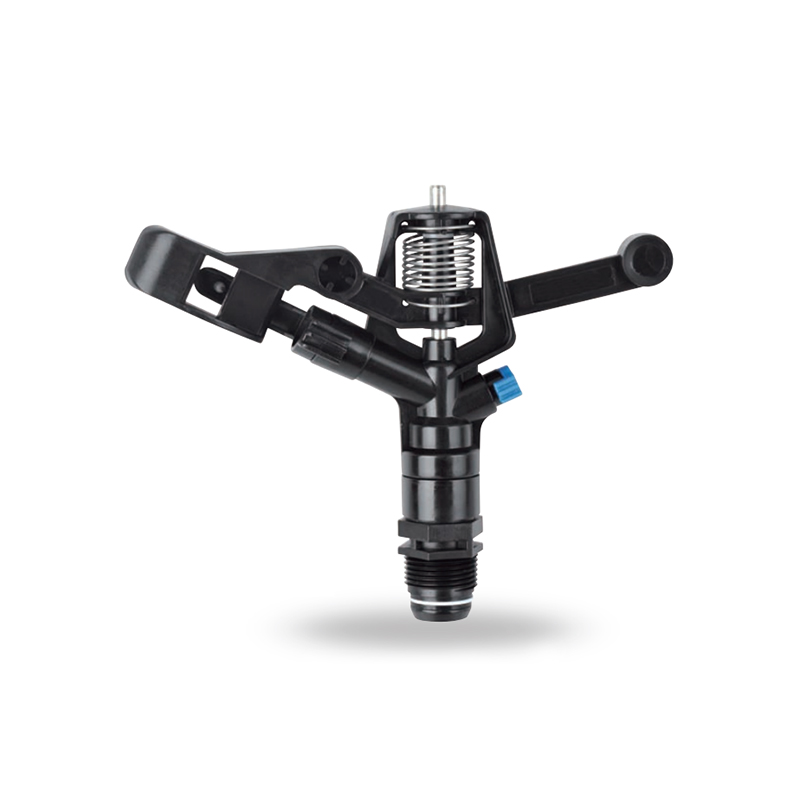
The POM agricultural irrigation sprinkler water impact sprinkler is known for its excellent abrasion resistance and durability, ensuring consistent performance over time. It is designed to increase wa...
See Details -
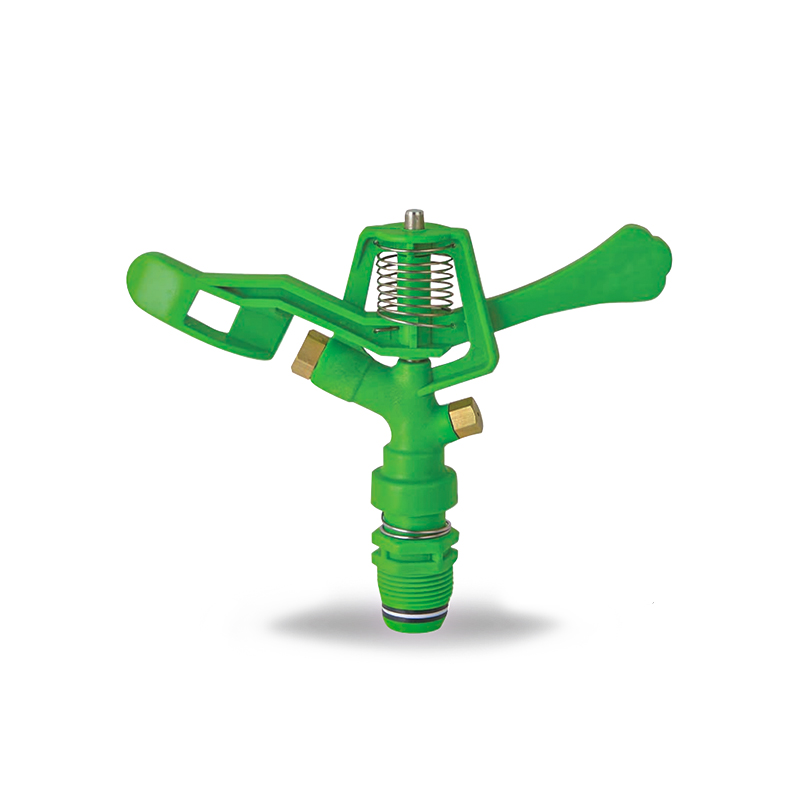
The POM Agricultural Irrigation Sprinkler with Metal Nozzles is a device designed for efficient irrigation, combining premium polyacetal (POM) material with durable metal nozzles to ensure superior sp...
See Details -
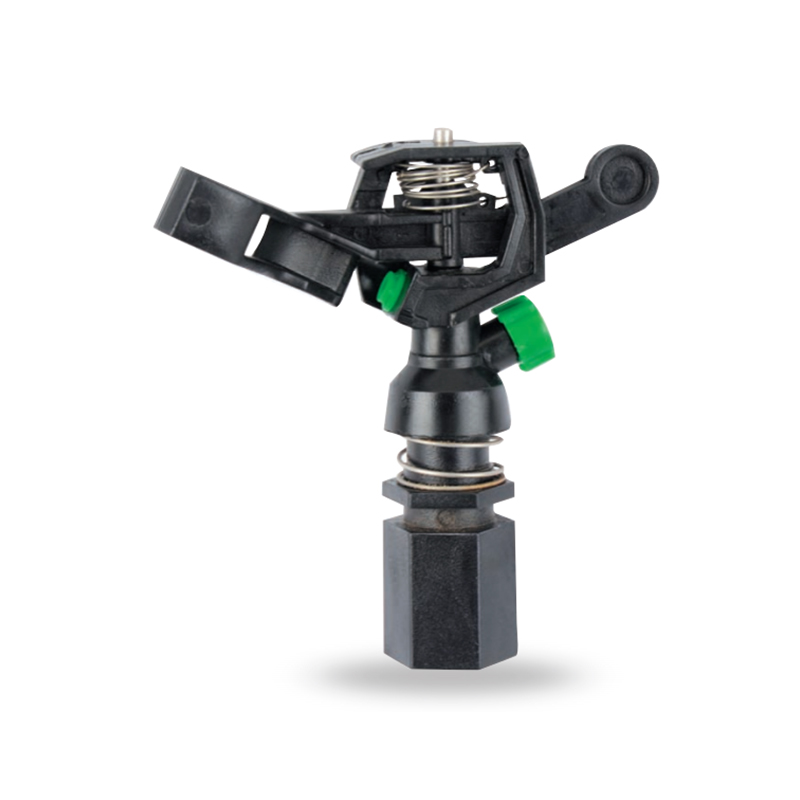
Watering irrigation system 3/4 inch nozzle field Impact Sprinkler is perfect for field irrigation and easily meets the water needs of large crops. Its powerful spray ensures that every nook and cranny...
See Details -
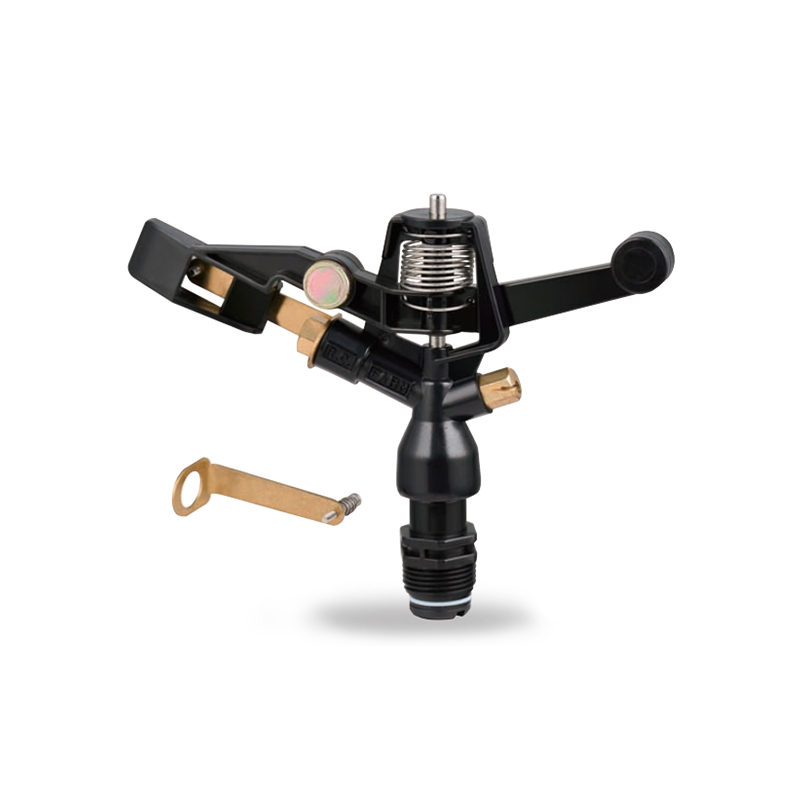
The POM Agricultural Irrigation Sprinkler with Brass Nozzles is an efficient and durable irrigation device designed to meet a wide range of agricultural needs. The sprinkler is made of polyacetal (POM...
See Details -
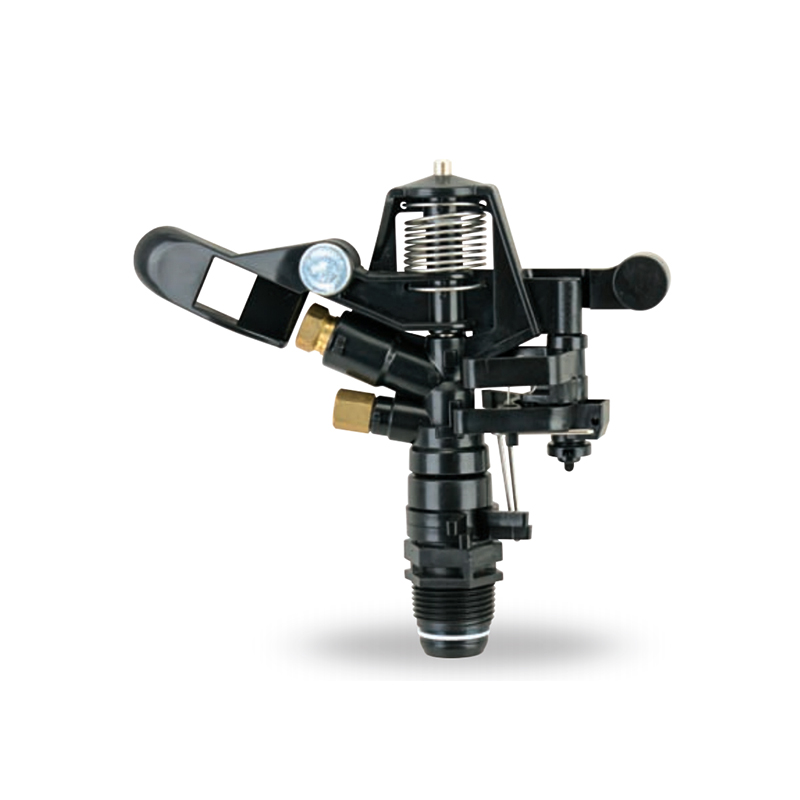
The Double Nozzle Garden Farm Impact Part-Circle Sprinkler is a highly efficient garden irrigation device designed for large planting areas. Its double nozzle design produces a strong, even stream of ...
See Details

PRODUCTS & SERVICES

CONTACT US
 No.518, Ruihao Road, Lizhou Street, Yuyao City, Zhejiang Province, China
 +86-13105554615 / +86-18005843886
 decheng@dcssq.com fredzhu@dcssq.com
 LISA
LISA
 Fred Zhu
Copyright © Ningbo Dewo Irrigation Equipment Co., Ltd. All Rights Reserved. China Agricultural Plastic Sprinkler Manufacturers Wholesale Irrigation Plastic Sprinkler Factory
